
Notes written twice
Details discussed during the consultation often have to be rewritten into records afterwards, adding time to every case.

CONTAHA was created around a simple idea: clinical documentation, treatment planning and patient management should work together, not exist as disconnected tasks.
Implant Consultation in 60 Seconds · See how a consultation becomes a structured plan
An implant case is rarely a single appointment. It runs from consultation and assessment through planning, consent, surgery and long-term review — and in many practices, each of those steps is recorded somewhere different.
Details discussed during the consultation often have to be rewritten into records afterwards, adding time to every case.
Without a structured format, the depth and order of clinical assessment can vary between cases and between clinicians.
Phase-wise treatment plans are often drafted manually each time, even when much of the case information is already recorded.
Patients need to understand their findings and treatment journey, but preparing clear reports takes time many clinics don't have.
Documents, imaging, consent and case notes can end up spread across files, folders and separate systems.
Post-operative reviews and maintenance visits are easier to miss when they aren't connected to the original case.
Every practice works differently. CONTAHA aims to make these steps more efficient without replacing the clinician's judgement.
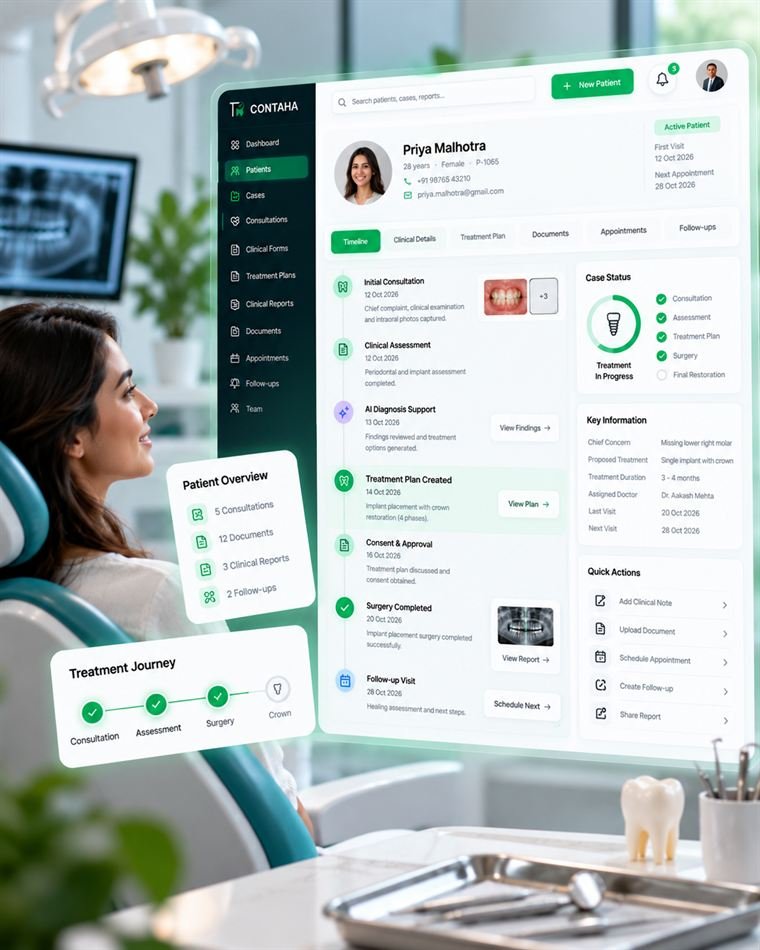
Implant dentistry depends on structured information — and that structure should support the clinician, not slow them down.
CONTAHA began with the everyday workflow of an implant practice: the consultation, the assessment, the plan, the conversation with the patient, and the months of follow-up that come after. Each step matters, and each one produces information the next step depends on.
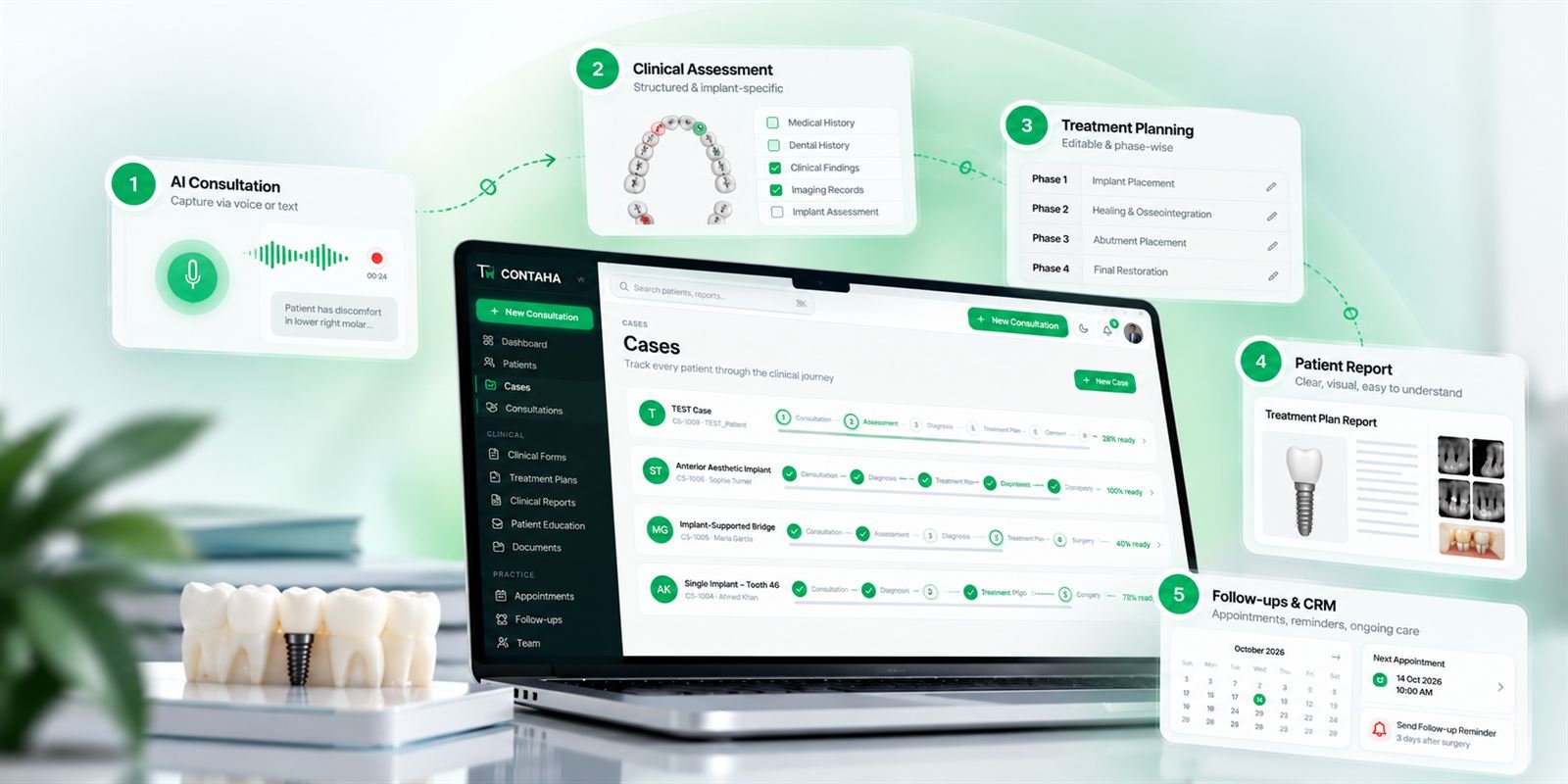
We set out to connect those steps. Capture the consultation once, organise it into a structured assessment, generate a proposed plan the dentist can edit, explain it clearly to the patient, and keep it all attached to the same patient record.
The principles that shape how CONTAHA is designed.
Guided, condition-specific forms that capture what matters for the case without burying the clinician in fields.
AI helps organise information and propose plans. The dentist reviews, edits and decides — every time.
Consultations, assessments, plans and documents belong to the same case, not to separate tools.
Proposed plans are a starting point. Every phase can be adjusted to reflect the clinician's approach.
Structured reports that help patients follow their findings and the proposed treatment journey.
Appointments and follow-ups stay linked to the patient, so ongoing care is part of the workflow.
We want structured clinical workflows to be practical for every implant-focused practice, not only those with dedicated administrative teams.
Bring consistent, guided documentation to everyday implant consultations.
Keep every record, plan and document where the team can find it.
Link the first conversation to treatment, consent and long-term care.
Talk to our team and see how CONTAHA handles a real implant consultation, from the first conversation to a finished plan and report.
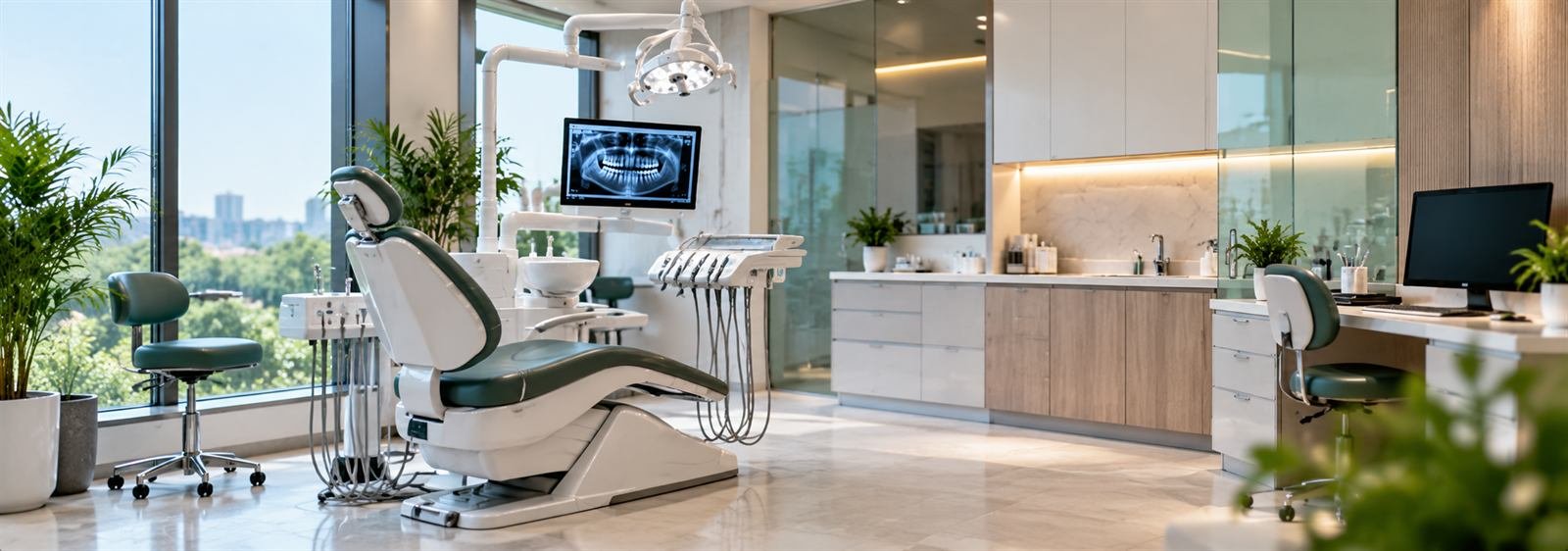
Bring your consultations, clinical documentation and treatment planning into one connected workflow.